

Independent digital product studio
We design and build mobile apps, web platforms, AI features and the backend behind them.
A senior London team with twenty years of shipping products for Virgin, Shell, Heycar, Lloyds Banking Group and ClearBank. You work directly with the people doing the work.
Selected products and platforms we’ve helped design, build and ship.
Four pillars, one team accountable.
Most projects need two or three of these. They are priced and planned together, not handed between agencies. No account manager, no relay of briefs: you speak to the people writing the code.

Mobile apps people actually enjoy using
You have an app in mind, or one that isn't working. We design it, build it once for iPhone and Android, and get it into both stores. It still feels native.
What we deliver
- Product design and prototyping
- React Native / Expo build
- Store submission and release management
- Crash reporting, analytics and over-the-air updates

Websites and platforms that convert and rank
A site that's fast, easy to update and found in search. If you're rebuilding, we move you over without losing the traffic you've earned.
What we deliver
- Design system and component library
- Next.js / TanStack Start build
- Core Web Vitals and SEO engineering
- CMS set-up and editor training

AI features that hold up with real users
Most AI work stalls after the demo. We start from a real user journey and build something that keeps its quality, and its costs, once people start using it.
What we deliver
- Feature scoping and model selection
- Chat, generation and automation flows
- Evals, guardrails and cost controls
- Streaming UI and fallback states

The backend your product runs on
APIs, logins, payments and data pipelines: the parts users never see but always feel. We build them properly and hand them over so your team isn't left guessing.
What we deliver
- API and BFF design
- Auth, payments and third-party integrations
- Infrastructure as code, CI/CD
- Monitoring and on-call runbooks
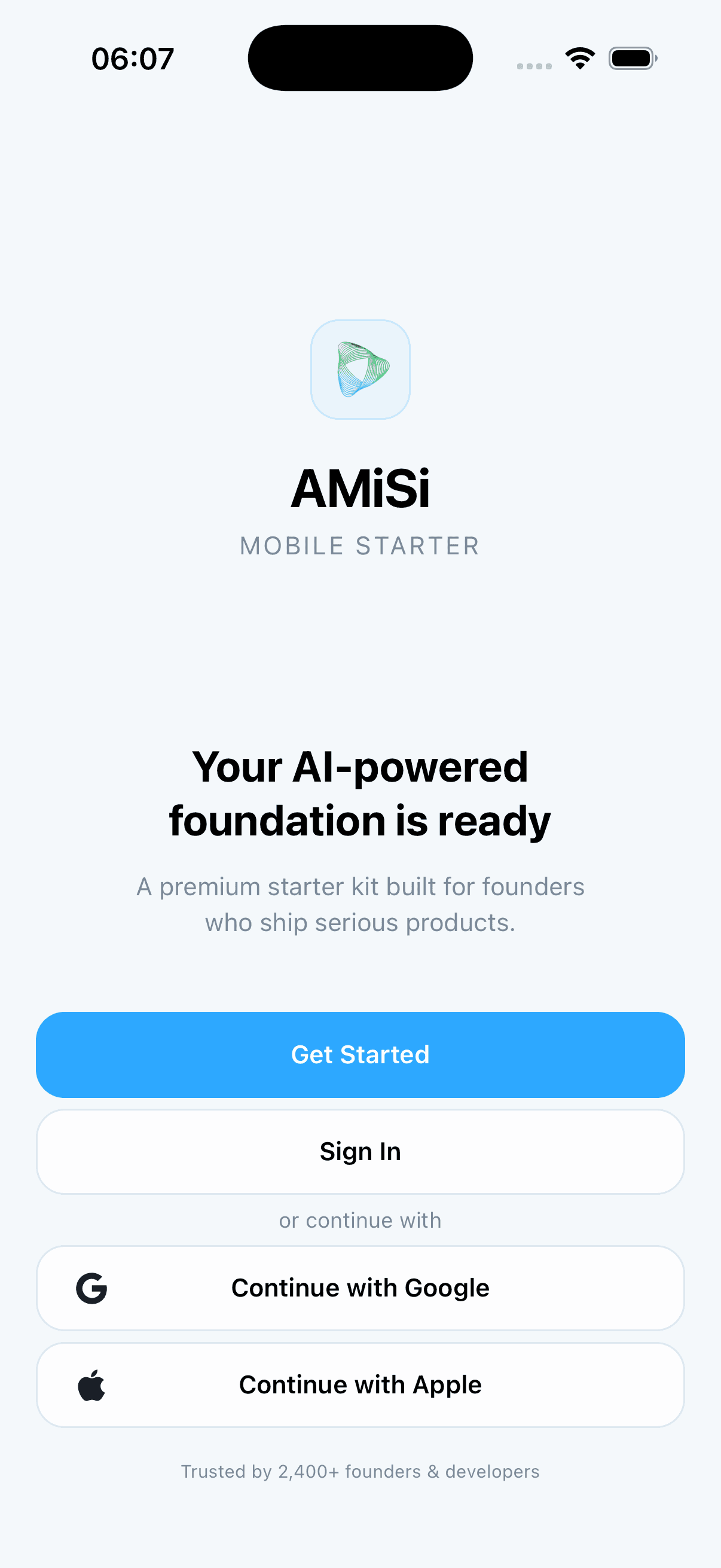
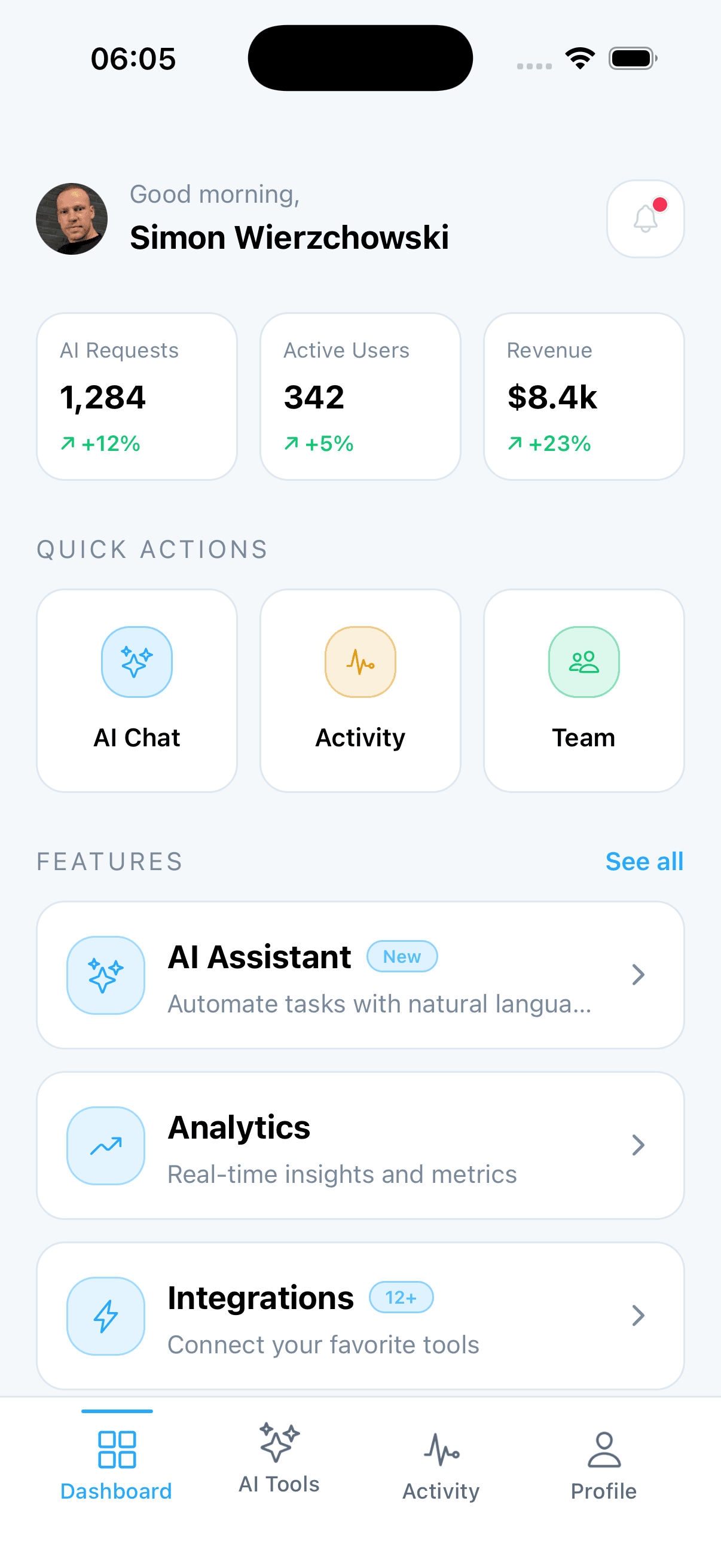
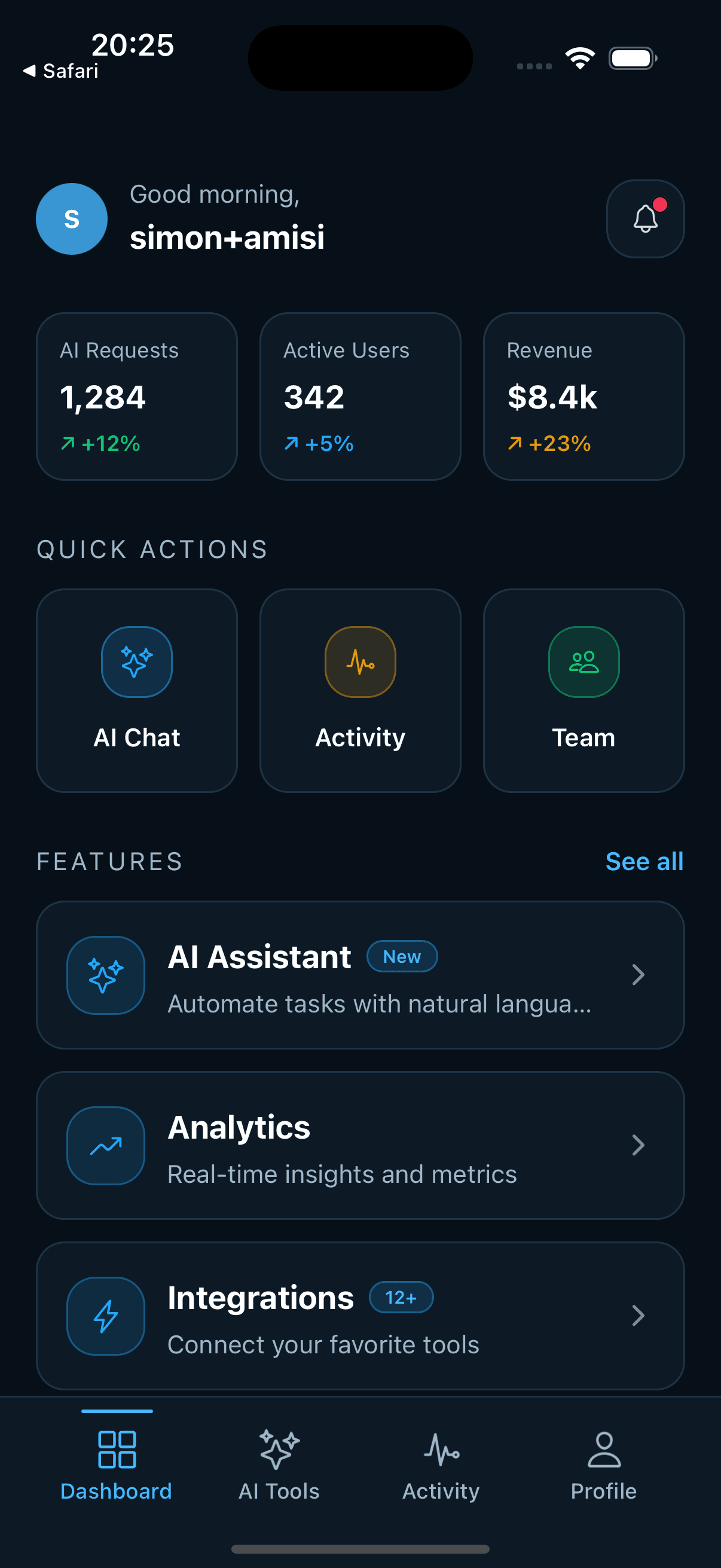
 AMiSi Mobile Starter
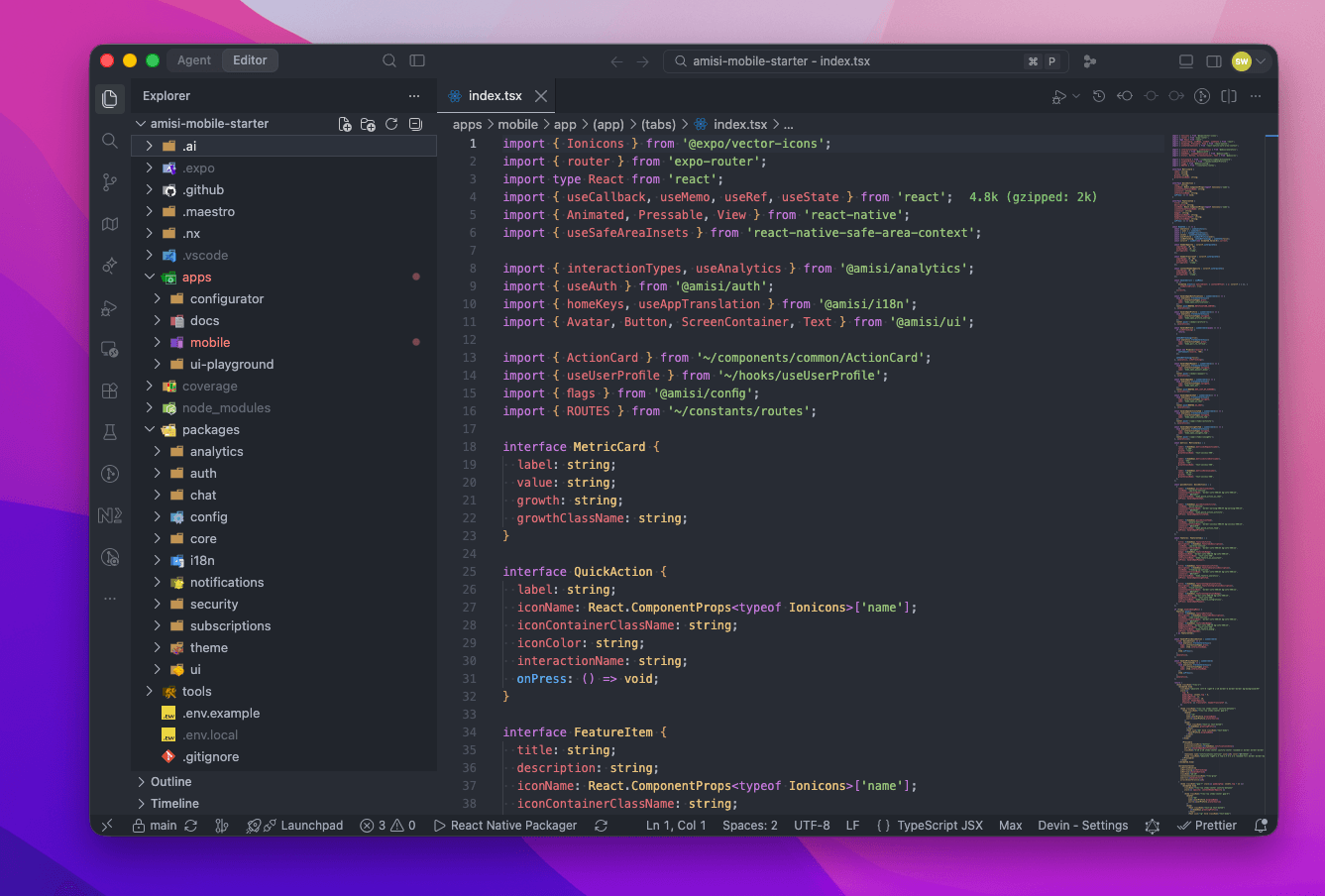
Production-ready Expo &React Native starter kit
Products people actually use.

The brief
GamScore needed to turn a validated product concept into a secure consumer platform. The experience had to give bettors a clear, continuously updated view of their gambling health while supporting subscriptions, protected content and dependable account journeys across mobile and web.
What we built
Built the mobile application end to end from the Amisi Mobile Starter, integrating RevenueCat subscriptions for sandbox and live products, Firebase authentication, Analytics and Crashlytics, and authorised access to protected documentation. We created an authenticated, version-controlled Fastify BFF that aggregates the APIs required by the mobile app. A separate customer portal was engineered with its own BFF and data contracts, keeping each client surface secure and independently evolvable.
What changed
GamScore now has a production-ready platform rather than a prototype: iOS and Android apps, a dedicated web portal, independently versioned API layers and repeatable releases. Shared packages and modules live in a proven Nx monorepo; unit, integration and end-to-end coverage protect the critical journeys; and GitHub Actions validates quality before deploying each application to its target environment.
The brief
GamScore needed to turn a validated product concept into a secure consumer platform. The experience had to give bettors a clear, continuously updated view of their gambling health while supporting subscriptions, protected content and dependable account journeys across mobile and web.
What we built
Built the mobile application end to end from the Amisi Mobile Starter, integrating RevenueCat subscriptions for sandbox and live products, Firebase authentication, Analytics and Crashlytics, and authorised access to protected documentation. We created an authenticated, version-controlled Fastify BFF that aggregates the APIs required by the mobile app. A separate customer portal was engineered with its own BFF and data contracts, keeping each client surface secure and independently evolvable.
What changed
GamScore now has a production-ready platform rather than a prototype: iOS and Android apps, a dedicated web portal, independently versioned API layers and repeatable releases. Shared packages and modules live in a proven Nx monorepo; unit, integration and end-to-end coverage protect the critical journeys; and GitHub Actions validates quality before deploying each application to its target environment.
Features that ship, not demos.
How we know it will hold up.
Senior people. Clear decisions. No handovers.
- 01Direct access
The people in the room are the people doing the work.
Scope, design and engineering decisions stay close together—without an account-management relay.
- 02Visible progress
You see the product running throughout the engagement.
Regular working builds make progress visible and surface difficult decisions while they are still inexpensive to change.
- 03Clean ownership
The code is yours from the first commit.
Delivery includes documentation, a support window and a codebase the next team can actually understand and run.
Six steps, no surprises.
Objectives, audience, competitors and constraints, written down before anything is designed. This is where the expensive mistakes get caught.
Notes from inside the build.
By the numbers
Continuity, measuredLet’s start growing your business.
Tell us what you are building. If it is not something we should take on, we will say so and point you somewhere better.